Big Buddha and Wat Plai Laem: A Half Day From Choeng Mon
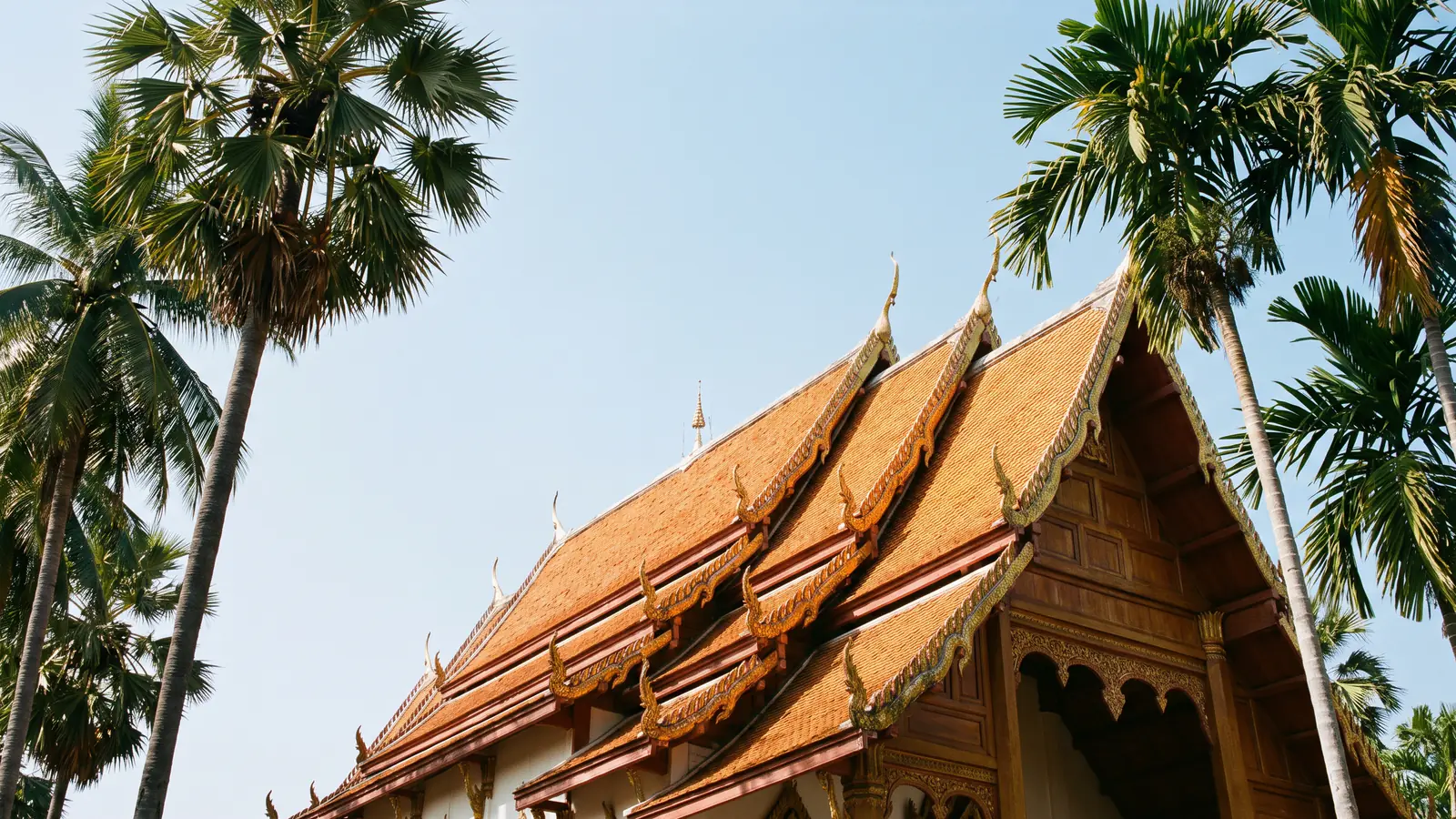
From Choeng Mon, Plai Laem, Bang Rak or Bophut, Big Buddha and Wat Plai Laem sit close enough together to see both in one unhurried morning. This guide covers what the statues actually represent, the names that get mixed up most often, how to dress once you arrive, and a realistic order to see them in before the coach parties and the midday heat show up.
Two temples, a few minutes apart
From Choeng Mon, both temples are a few minutes' drive, with Wat Plai Laem the nearer of the two. The two temples themselves sit just over a kilometre apart on the Bang Rak side of the island, close enough to walk between if the heat allows it, though most visitors drive or take a short taxi. For the bay, the beach and getting around this stretch of coast, see our area guide to Choeng Mon; if you are still working out how to arrive, getting to Choeng Mon covers the routes in from the airport, Chaweng and Bophut.
Big Buddha (Wat Phra Yai): what you are looking at
Wat Phra Yai, better known as Big Buddha, sits on Koh Fan, a small islet joined to the main island by a causeway at the end of Bang Rak beach. The seated golden figure is about 12 metres tall, shown in the Maravijaya posture, touching the earth to call it as witness to the Buddha's enlightenment, and was completed in 1972. The temple is roughly 3 km north of Samui's airport, 3 km east of Bophut and 7.5 km from Chaweng, on a short spur off the ring road.
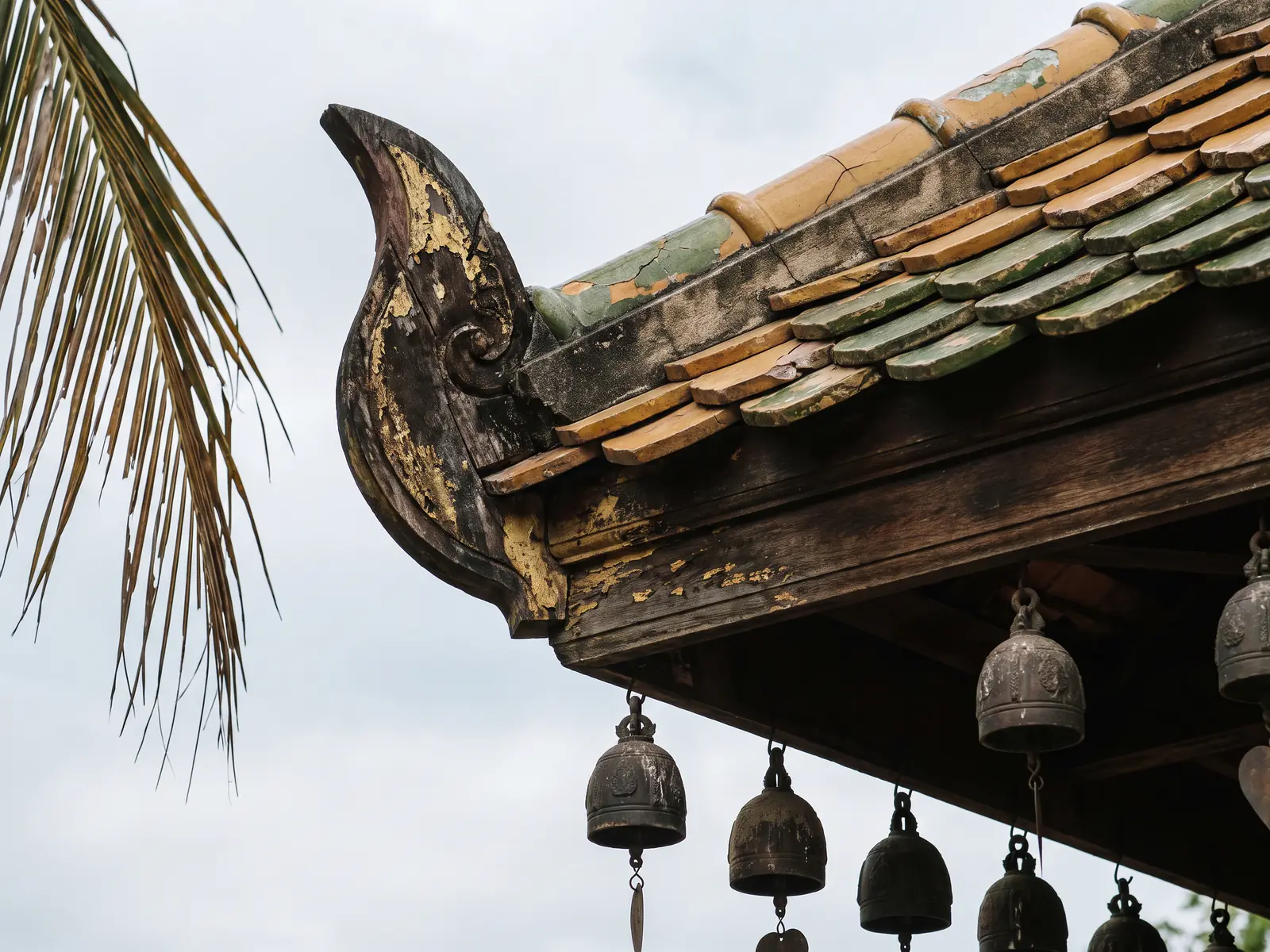
Stalls selling food, drinks, souvenirs and amulets line the courtyard at the base of the steps, with a small car park alongside. Entry is free, and a donation toward the temple's upkeep is welcomed rather than required. Big Buddha remains a working temple that Thai visitors come to pray at, not only a stop for photographs.
Wat Plai Laem: Guanyin and the lake
Wat Plai Laem, formally registered as Wat Laem Suwannaram, began life as a village temple in the 1880s. The lake, the large statues and the wider complex visitors see today are a later, modern addition built around that older site, and the design mixes Thai and Chinese styles throughout.
The centrepiece is a large white statue of Guanyin, the Chinese Buddhist figure of compassion, standing on a platform out in the temple lake. English-language sources describe her as eighteen-armed; Thai tourism material often nicknames her the thousand-handed Guanyin, a popular nickname rather than a literal count, so do not expect to find a thousand arms if you count them.
A second large white seated figure nearby gets called the Laughing Buddha, or Budai, in English guides and Phra Sangkajai in Thai ones. Those are not two labels for one person. Budai was a tenth-century Chinese monk; Phra Sangkajai is the arhat Kaccayana, one of the Buddha's own disciples, and Thai practice regularly conflates the two.
Parking at Wat Plai Laem is free, and there are fewer stalls than at Big Buddha, which makes the walk around the lake a calmer one.
What to wear and how to behave
Both temples expect the same standard: shoulders and knees covered, and shoes off before you step into any building that houses a Buddha image. A sarong or cover-up can sometimes be borrowed or bought near the entrance, but supply is not guaranteed, so arrive dressed for it.
- Pack a light scarf or shawl if your top leaves your shoulders bare.
- Trousers, a long skirt or a sarong will cover shorts or a swimsuit.
- Keep your voice down and your phone on silent once you are inside a temple building.
- Treat the buildings as active places of worship rather than a backdrop for photos.
When to go, and doing both in one morning
Neither temple publishes an official timetable, and the guidebooks disagree. Big Buddha is variously given as opening somewhere between 6:00 and 8:00 and closing around 18:00; Wat Plai Laem is reported a little more consistently at roughly 6:00-18:00. Plan around daylight and you will be fine.
Arriving before about 9:00 gets you cooler air, softer light and the steps largely to yourself. Organised tour groups tend to start arriving from mid-morning, and the stone underfoot turns uncomfortably hot once the sun is high. A late afternoon visit is the next best window if an early start does not suit.
- Start with whichever temple is nearer your bed: Big Buddha if you are on the Bang Rak side, Wat Plai Laem if you are in Choeng Mon or Plai Laem.
- Give each temple 30-45 minutes, longer if you would rather sit by the lake than move straight on.
- Cover the short distance between them by taxi, Grab or your own transport; it is walkable but exposed once the sun is up.
- Aim to be back on the road by 9:30 or 10:00, ahead of the busiest coach traffic.
Where to eat afterwards
Khun Yak is a short drive back on Hat Choeng Mon Road, open every day from 11:00 to 22:00 for dine-in and takeaway. Order online instead if you would rather have food delivered or ready to collect, paid by PromptPay QR, and look over the menu before you set off. For the address, a map and a phone number, see how to find us.