Vegetarian and Vegan Thai Food: What to Order and What to Ask
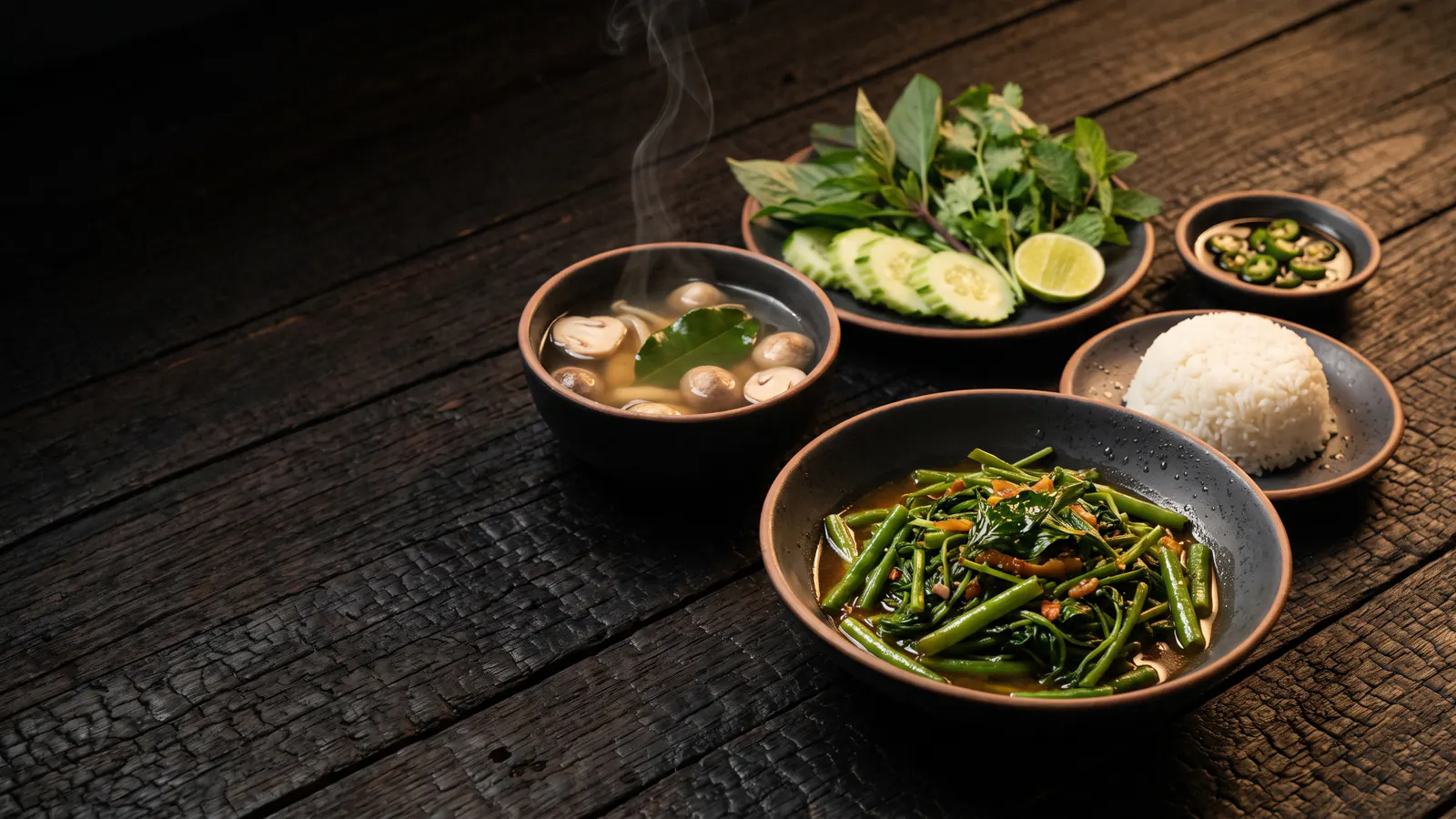
Thai cooking is built on fish sauce, shrimp paste and often a pork stock, so telling a kitchen no meat leaves out most of what actually needs to change. Eating well as a vegetarian or vegan visitor, or resident, comes down to two things: knowing which of jay, mangsawirat or vegan you actually mean, and being specific about what to leave out.
What follows is about what jay, vegetarian and vegan actually mean in a Thai kitchen, what tends to hide in the food, and the Thai phrases that get a kitchen to leave it out.
Jay, mangsawirat and vegan are three different things
Jay, mangsawirat and vegan get used almost interchangeably by visitors, but a Thai kitchen hears three different sets of rules, and mixing them up is the easiest way to get an order back wrong.
Jay is the strictest and the most specific. The word comes from a Teochew Chinese term meaning a vegetarian or fasting diet, and the practice is tied to Chinese Buddhist and Taoist observance around the Nine Emperor Gods Festival. Proper jay food excludes all meat, seafood and animal products, plus a group of pungent vegetables that tradition treats as too stimulating for a calm, meditative diet.
The list is more settled than English-language guides suggest. Thai sources teach five: garlic, onion, rakkyo, Chinese chives and tobacco leaf, with shallot and spring onion folded in with onion. The fifth is the one that catches people out, because it is not a vegetable at all; the grouping is about what stirs the body up, not about botany. Some English write-ups swap in asafoetida, which Thai accounts of the five do not include.
The traditional reasoning is that these foods overstimulate the body and disturb meditative calm. Treat that as a belief passed down through practice, not a medical claim.
Mangsawirat, everyday Thai for vegetarian, is far looser. It usually rules out meat, but dairy, egg and small amounts of animal seasoning are commonly accepted, and in practice it is interpreted by each cook rather than fixed to one shared standard.
Vegan is newer again, a loanword tied more to health and environmental choices than to religious practice, and recognition of the term is uneven once you are outside Bangkok and the main tourist areas. Do not assume the English word alone will be understood everywhere; pairing it with specific exclusions works better, and the phrases further down do exactly that.
What to say
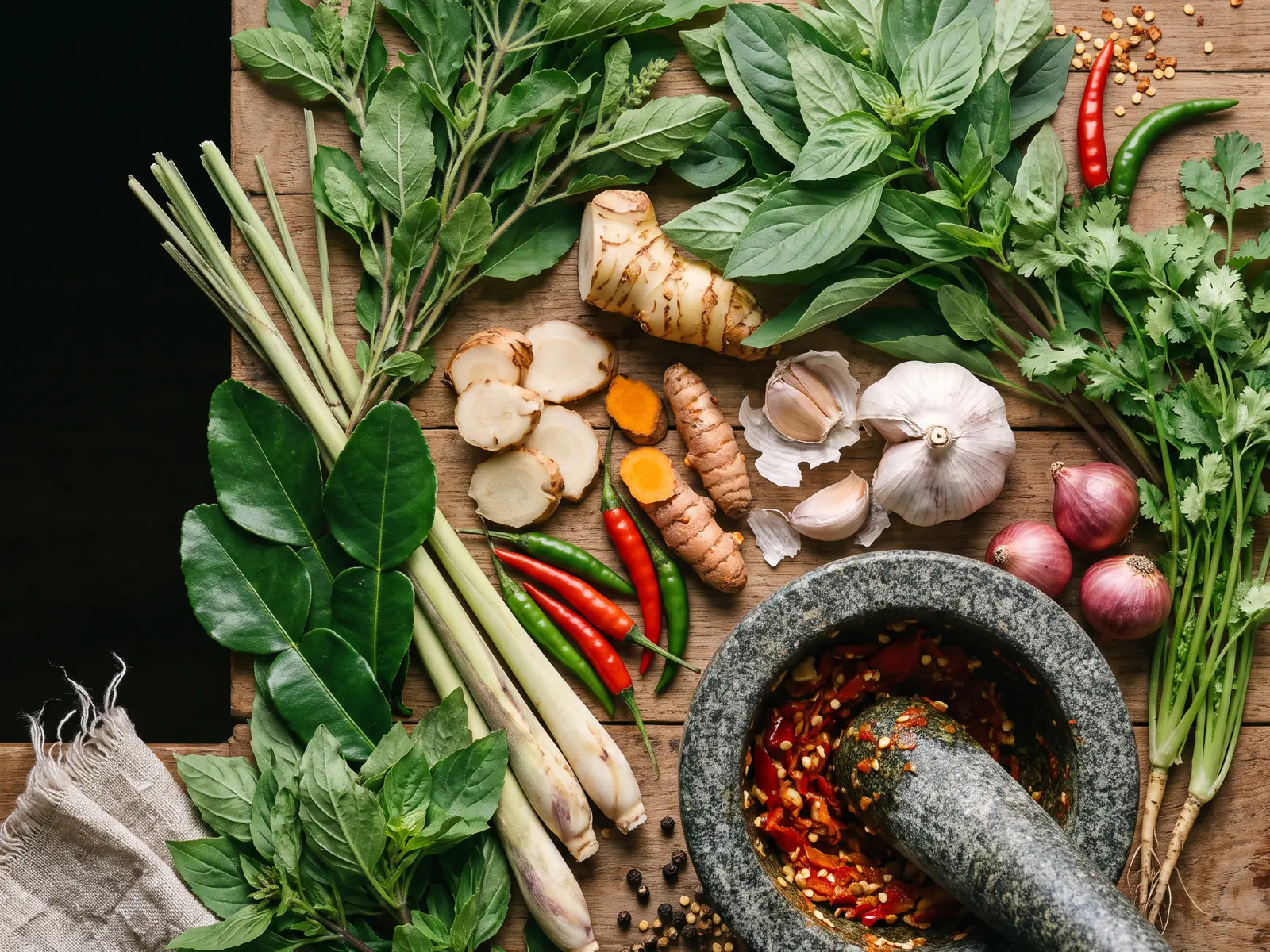
A single word rarely does the job by itself. Pairing a category with the specific things to leave out is the most reliable approach, in English or in Thai.
These phrases sit inside an ordinary order, so they work best once the rest of it is familiar; ordering in Thai covers the words around them. Gin jay is understood most widely and most reliably across Thailand, including outside Bangkok and the main tourist areas. Vegan is newer and its recognition is patchier, so lead with a phrase from the table below. Add khrap at the end if you are male, or kha if you are female; either makes a request sound more polite, though staff will understand you either way.
| Thai script | Romanisation | Meaning |
|---|---|---|
| กินเจ | gin jay | I eat jay |
| ผมเป็นมังสวิรัติ / ฉันเป็นมังสวิรัติ | pom bpen mangsawirat / chan bpen mangsawirat | I am vegetarian (male / female) |
| มีอาหารเจไหม | mee ahaan jay mai | Do you have jay food? |
| ไม่ใส่น้ำปลา | mai sai nam plaa | No fish sauce |
| ไม่ใส่น้ำมันหอย | mai sai nam man hoy | No oyster sauce |
| ไม่ใส่กะปิ | mai sai gapi | No shrimp paste |
| ไม่ใส่เนื้อสัตว์ | mai sai neua sat | No meat |
| ไม่ใส่ไข่ | mai sai khai | No egg (khai, aspirated; kai is chicken) |
None of this guarantees a completely animal-free plate; a kitchen might use a stock or a pre-made paste that already contains something you asked to avoid. It does put staff on notice about what matters to you, which is the most any phrase can do in a kitchen you don't work in yourself.
Dishes that adapt well, and ones that rarely do
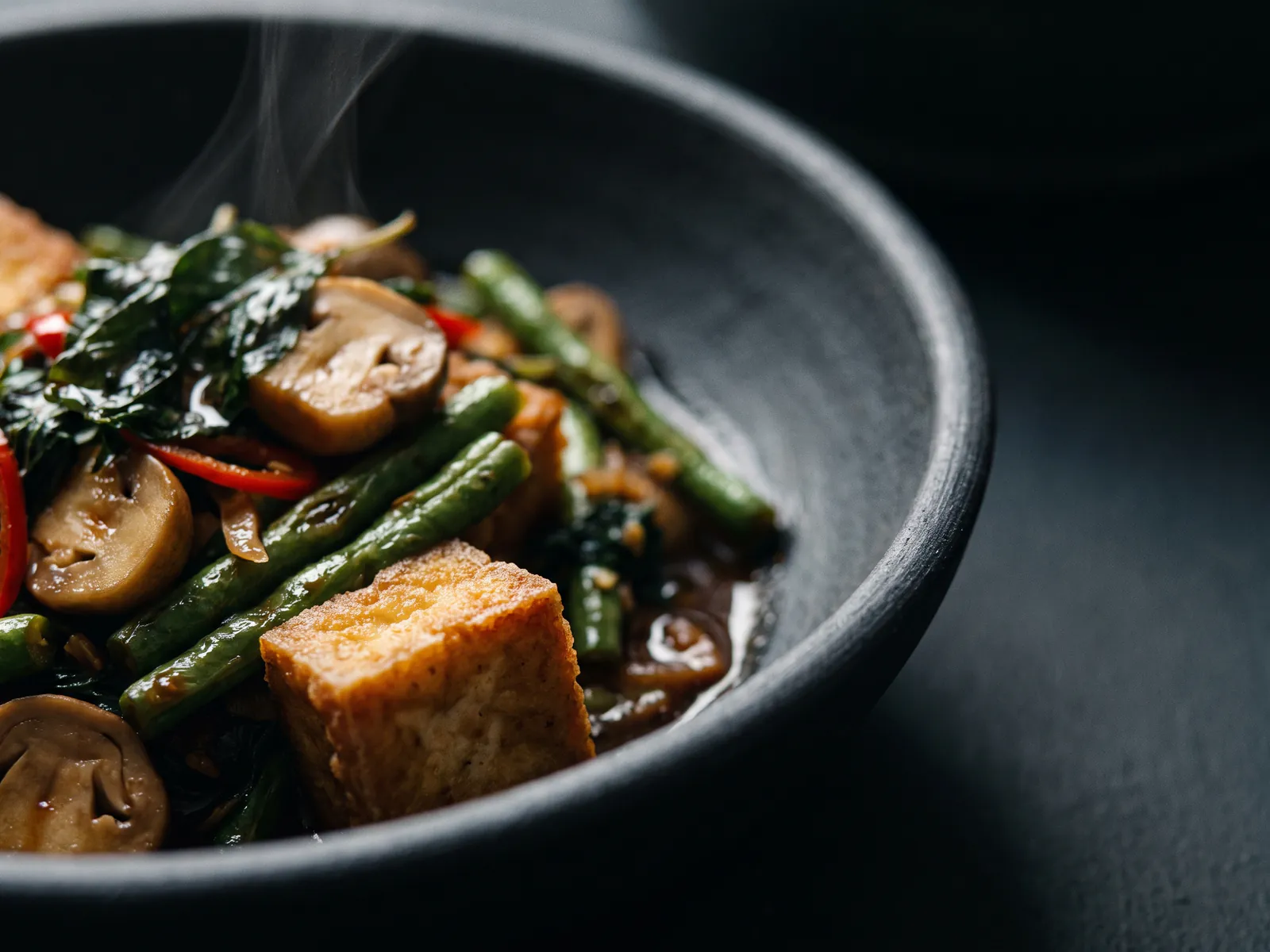
Some Thai dishes are built to flex. Others are the dish they are because of an ingredient you are trying to avoid, and no amount of asking changes that.
| Usually easy to adapt | Needs the paste or sauce checked |
|---|---|
| Stir-fried mixed vegetables, and tofu dishes generally | Green curry and massaman, since the paste itself typically contains shrimp paste |
| Tom yum and tom kha, made with tofu or mushroom instead of meat or seafood | Pad see ew and pad thai, which usually add oyster sauce, egg and often dried shrimp |
| Mushroom larb, in place of a meat larb | Any curry made from a shop-bought paste, since some brands include shrimp paste as standard while others sell an explicit vegetarian version |
| Pad kra pao made with tofu or mushroom instead of meat | Som tam Thai unless ordered as som tam jay, since the traditional version includes dried shrimp and fish sauce |
A few dishes rarely work without a kitchen that runs a genuinely separate vegetarian line. Khao soi is one: its character comes from a curry built well in advance, not something to leave an ingredient out of on request. The same goes for anything built on an animal stock, gaeng jued looks like a plain vegetable and tofu soup, but the traditional version is made with pork and pork stock, exactly the kind of dish that catches people out.
The Vegetarian Festival, and what changes
The Vegetarian Festival, tied to the Nine Emperor Gods Festival, runs for nine days and nights from the first to the ninth day of the ninth Chinese lunar month, so the Gregorian dates move every year; the rule is stated by Surat Thani City Municipality, in the same province as Koh Samui. In 2026 it falls on 10 to 18 October, with many people beginning a cleansing day on 9 October.
Yellow flags marked with a red jay character appear outside participating kitchens and stalls, temporary jay stalls spring up, and supermarkets add jay sections to their shelves. Phuket's observance is the largest and best known. Koh Samui's is real but modest: expect an occasional yellow flag around the island in October, nothing on Phuket's scale.
The same caution applies here as anywhere else: a yellow flag is a good sign, not a guarantee, so the phrases above are still worth using even at a dedicated jay stall.
Ordering with confidence
None of this is about being difficult. Thai kitchens handle dietary requests constantly, and being specific, gin jay, no fish sauce, no oyster sauce, gets a far more reliable result than a single word and a hopeful look.
When you order online with us, you can add a note to any dish, gin jay or no fish sauce for example. Treat that as a request rather than a guarantee: whether a particular dish can be made without fish sauce depends on how its sauce or paste was built, and the kitchen is the only place that knows.
If chilli heat is the other thing on your mind, our guide to Thai food spice levels takes the same approach: say plainly what you want, and a Thai kitchen will usually get you there.