How to Read a Thai Menu: Decoding Dish Names
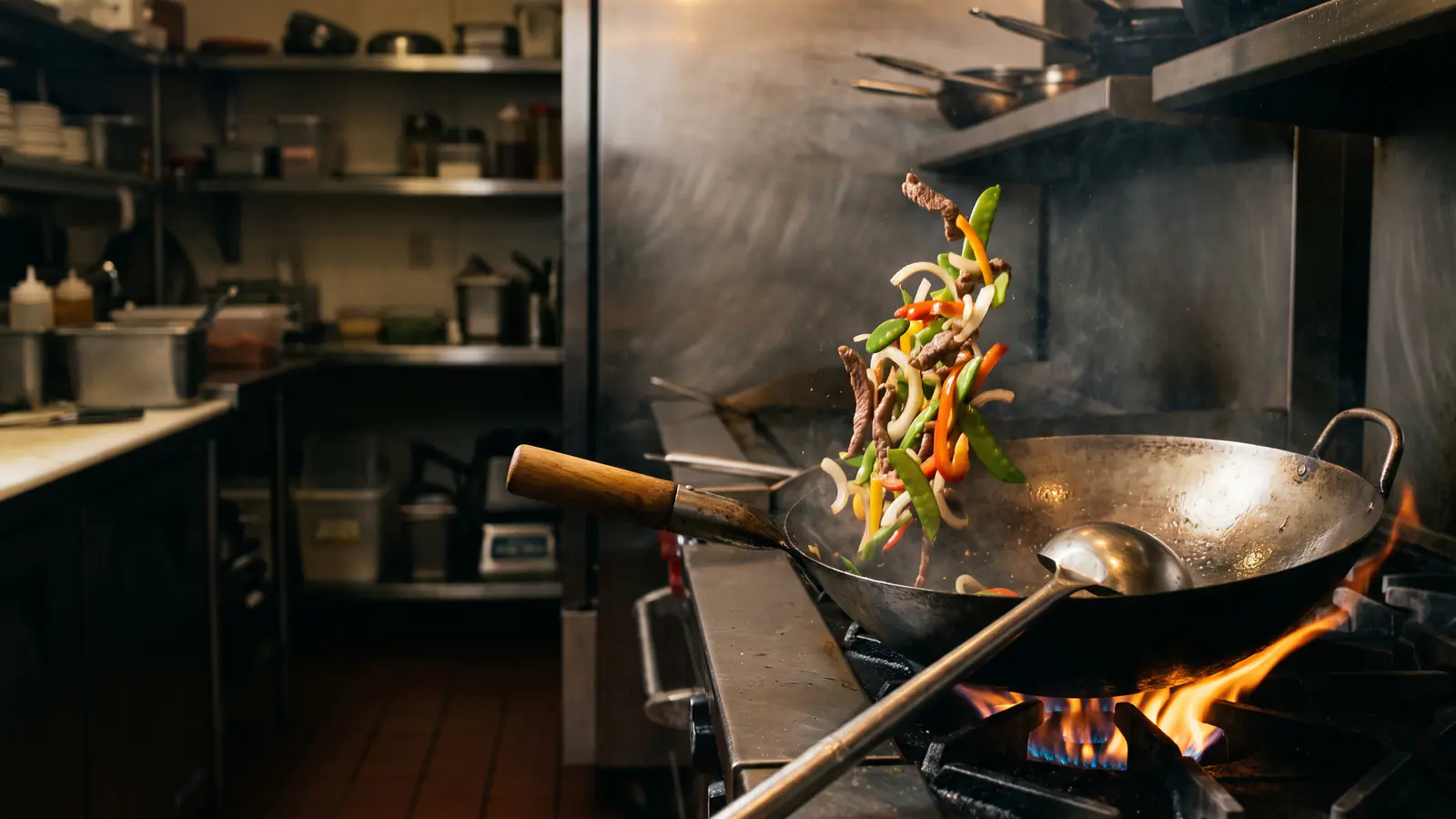
A menu in transliterated Thai can look like twenty unrelated words. It is closer to a code. Most dish names are built from the same few parts: a cooking method, a main ingredient and, now and then, a style or a flavouring. Once you know the parts, a dish you have never seen can be read straight off the page.
This guide is about the words printed on the menu, not the words you say to a server. For the spoken side, including pronunciation, see our guide to ordering food in Thai. Every word below appears in Thai script, a plain romanisation and an English meaning, and the tables are the part to come back to.
Most dish names are a formula
Rachel Cooks Thai, one of the clearest decoders in English, puts it plainly: many Thai dishes are named descriptively, with a cooking technique combined with a protein and/or a main ingredient. Her guide gets by on a short list of words. This one is a little longer, because it adds noodles, the modifier words and the exceptions.
Take three names and split them.
| Thai script | Romanisation | The parts | Reads as |
|---|---|---|---|
| ผัดผักรวม | pad pak ruam | ผัด stir-fried + ผัก vegetables + รวม mixed | Stir-fried mixed vegetables |
| ข้าวผัดกุ้ง | khao pad goong | ข้าว rice + ผัด stir-fried + กุ้ง prawn | Fried rice with prawn |
| ปลาทอดขมิ้น | pla tod khamin | ปลา fish + ทอด fried + ขมิ้น turmeric | Fish fried with turmeric |
The order is not fixed. In the first name the method leads. In the second the rice leads and the method follows, which is the usual pattern for fried rice: ข้าวผัด with the main ingredient added after it. In the third the fish comes before the method. Read all the parts instead of expecting a position.
The rest of this guide takes the parts in turn: the methods, the ingredients, the noodles and the small words at the end of a name. After that come the names that refuse to follow the pattern, and a routine for decoding a line from scratch.
Pad, tod, tom, yang: the cooking methods
The method word tells you what happened to the food, and it is the most useful word on the line. Start with the first four in the table: ผัด, ทอด, ต้ม and ย่าง. The rest work on the same logic.
| Thai script | Romanisation | Meaning | Seen in |
|---|---|---|---|
| ผัด | pad | Stir-fried | ผัดผักรวม, stir-fried mixed vegetables |
| ทอด | tod | Fried in oil, deep-fried | ไก่ทอด, fried chicken |
| ต้ม | tom | Boiled, which on a menu usually means a soup | ต้มยำกุ้ง, tom yum with prawn |
| ย่าง | yang | Grilled over a fire | ไก่ย่าง, grilled chicken |
| นึ่ง | neung | Steamed | ปลานึ่งมะนาว, steamed fish with lime |
| แกง | gaeng | A curry, sometimes a soup or stew | แกงส้ม, the southern sour curry |
| ยำ | yam | A tart, spicy salad, from a word meaning to mix | ยำ as the first word of a salad name |
| ลาบ | laap | A salad of minced meat with lime juice, chilli and herbs | ลาบ on its own as a dish name |
| อบ | op | Baked | กุ้งอบวุ้นเส้น, prawns baked with glass noodles |
| ตุ๋น | tun | Stewed or braised slowly in liquid | ไก่ตุ๋น, stewed chicken |
| คั่ว | khua | Dry-fried in a pan with little or no oil | คั่วกลิ้ง, a southern dry-fried dish |
| ราด | raat | Poured over | ข้าวราดแกง, curry poured over rice |
Some of these have edges worth knowing. ต้ม means boiled, so it usually points to a soup, but it also gives ไข่ต้ม, a boiled egg, which is not a soup at all. แกง covers curry, soup and stew in one word, so a แกง can be thin and brothy as well as thick. ยำ and ลาบ are both a method and a dish, so they can be the entire name.
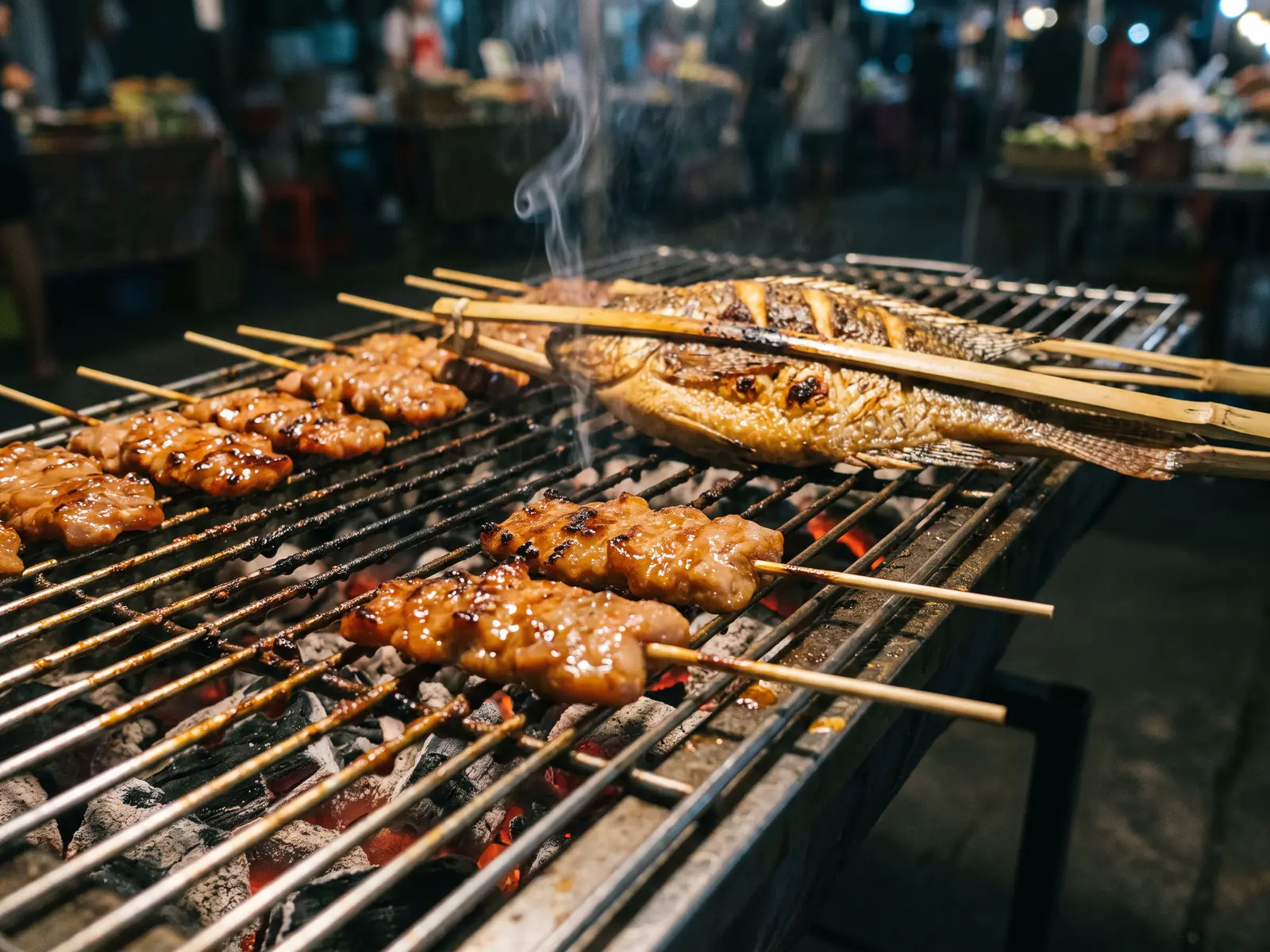
Grilling has more than one word. ย่าง is the one in ไก่ย่าง, grilled chicken, halved, flattened and cooked slowly over charcoal. ปิ้ง is also a grill word, and หมูปิ้ง is pork on skewers over charcoal. The sources checked for this guide do not set out a rule separating the two, so treat both as grilled and let the ingredient and the skewers tell you the rest.
Two of the words above lead into southern cooking. คั่ว is dry-fried, and the dry-fried dish คั่วกลิ้ง and the sour curry แกงส้ม are explained in our guide to southern Thai food on Koh Samui. Both show how a method word narrows a dish down without naming every detail of it.
Naming the main ingredient
The second slot names what the dish is made of. The animal and seafood words are short and few, and they repeat across hundreds of dishes.
| Thai script | Romanisation | Meaning |
|---|---|---|
| หมู | moo | Pork |
| ไก่ | gai | Chicken |
| เนื้อ | neua | Meat; colloquially beef |
| กุ้ง | goong | Prawn or shrimp |
| ปลา | pla | Fish |
| ปลาหมึก | pla muek | Squid, literally fish-ink |
| ปู | poo | Crab |
| เต้าหู้ | tao hu | Tofu |
| ไข่ | kai | Egg |
| ผัก | pak | Vegetables |
| ข้าว | khao | Rice |
A few words in the table repay a second look. ปลาหมึก is built from ปลา, fish, and หมึก, ink, which is the literal sense of the word. รวม means mixed or combined, so ผัดผักรวม is mixed vegetables, and you may also see it as the longer ผัดผักรวมมิตร. Rachel Cooks Thai also lists เป็ด for duck, หอย for clams and อาหารทะเล for seafood in general.
After the main ingredient you often find a flavouring, a herb or a sauce. กะเพรา is holy basil, and ผัดกะเพรา is the stir-fry built on it. ขมิ้น is turmeric, as in ปลาทอดขมิ้น above. ซีอิ๊ว is soy sauce, so ผัดซีอิ๊ว is stir-fried with soy sauce. The third slot is the hardest to list, but it follows the same logic: it names the thing that gives the dish its character.
Reading a name tells you the main ingredient. It does not tell you everything else in the pot, so for diets and hidden animal ingredients our guide to vegetarian and vegan Thai food is the better tool.
Noodles have their own vocabulary
Noodle dishes add a word that names the noodle itself. The general word is ก๋วยเตี๋ยว, which Wikipedia describes as a Sino-Thai name that originally meant only the wide rice noodle and is now used for rice noodles in general. The Thai spelling is itself unsettled: the Royal Society dictionary keeps both ก๊วยเตี๋ยว and ก๋วยเตี๋ยว.
| Thai script | Romanisation | Made from | Shape |
|---|---|---|---|
| เส้นใหญ่ | sen yai | Rice | Wide and flat |
| เส้นเล็ก | sen lek | Rice | Narrower than sen yai |
| เส้นหมี่ | sen mee | Rice | Thin and round, rice vermicelli |
| บะหมี่ | ba mee | Egg and wheat flour | Yellow egg noodles, usually sold fresh |
| วุ้นเส้น | woon sen | Mung bean | Thin and clear when cooked, glass noodles |
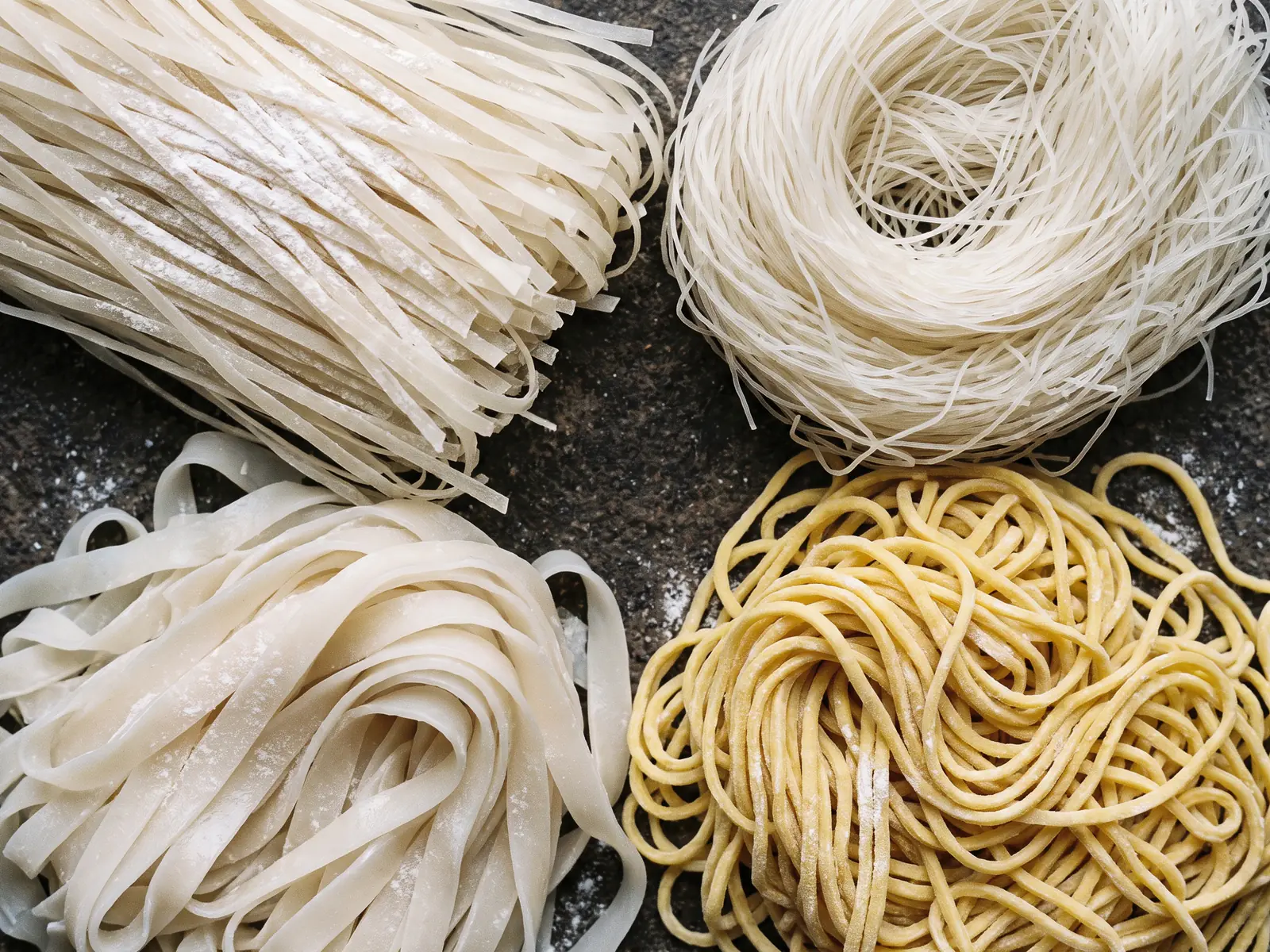
The names follow the same two-part habit as everything else. เส้น is the word for a long, thin thing and is the counting word for noodles, and the word after it says which kind: ใหญ่, big, or เล็ก, small. หมี่ names the thin rice kind. Descriptions of เส้นเล็ก vary between sources, which is why the table says only that it is narrower than เส้นใหญ่. Where the noodle matters to you, match the word against the table.
A noodle word then combines with a method or a style, just as an animal word does. ผัดซีอิ๊ว is the soy-sauce stir-fry, usually made with broad rice noodles and served dry. กุ้งอบวุ้นเส้น is prawns baked with glass noodles, and the noodle word sits at the end like any other ingredient.
Small words that change the dish
The last words on a line rarely name a dish. They change how it arrives. These are the ones to look for after the main ingredient.
| Thai script | Romanisation | Meaning | What it changes |
|---|---|---|---|
| ราดข้าว | raat khao | Poured over rice | Served poured over a plate of rice |
| แห้ง | haeng | Dry | Noodles served without the soup |
| น้ำ | naam | Water, liquid; with soup | Noodles served in broth |
| พิเศษ | phiset | Special | A larger or fuller version, see below |
| ใส่ไข่ | sai kai | With egg added | An egg joins the dish |
| เผ็ด | phet | Spicy | The dish is hot |
แห้ง and น้ำ matter most with noodles. The Royal Society dictionary distinguishes ก๋วยเตี๋ยวแห้ง, ก๋วยเตี๋ยวน้ำ and ก๋วยเตี๋ยวผัด, which are noodles served dry with toppings, in soup, and stir-fried. So the same noodle can arrive three ways, and one word at the end settles which.
ราด is the pouring word from the methods table, and it is flexible about position. Thai writers argue about the order for the curry-and-rice dish, with one article explaining that rice comes first and the curry is ladled over, so ข้าวราดแกง is the logical form. In practice the word turns up either side of the dish: recipe titles include both ข้าวราดกะเพราหมูสับ and กะเพราหมูสับราดข้าว, and both are the same idea.
พิเศษ means special, and on menus its exact meaning varies by stall. A Pantip thread says it has come to mean extra toppings rather than a bigger bowl, while other reports describe a slightly larger portion. Treat it as a signal that the version is fuller than the plain one, and look at what it adds.
ใส่ไข่ is the verb ใส่, to add, plus ไข่, egg. เผ็ด is spicy and is only a label here: how hot a kitchen makes a dish is a separate subject, covered in our guide to Thai food spice levels.
When the formula breaks
A decoder that claims to cover everything would be wrong. A handful of famous names break the pattern, and knowing why makes the pattern easier to trust.
- ผัดไทย, pad thai, is ผัด plus ไทย, Thai, so it does read as Thai-style stir-fried. But the name carries no noodle and no main ingredient. Wikipedia records that it was originally called kuai tiao pad thai, and the shorter name lost the noodle word.
- ส้มตำ, som tam, is built from ส้ม, sour, and ตำ, to pound. The parts are recognisable, but the order is not method first and ingredient second. The Lao original runs the other way, tam som, and the order was reversed in Thai.
- ต้มยำ, tom yum, is ต้ม, boiled, plus ยำ. Here ยำ does not mean a salad. It names the hot, sour and salty flavour, so ต้มยำกุ้ง is that soup with prawn.
- กะเพรา is the herb holy basil, yet Wiktionary notes it is colloquially a clipping of ผัดกะเพรา, so on some menus the herb's name alone stands for the whole dish.
None of these is a reason to give up the system. Each breaks the pattern in a way you can recognise once, and most of the menu still follows it.
Why one dish has three spellings
The holy basil stir-fry shows up as pad kra pao, pad kaprow and pad gaprao, and Wikipedia also lists pad kaprao and uses phat kaphrao as its title. There is no single correct way to write Thai in English letters, and different systems and habits give different answers. Wiktionary alone records two systems, Paiboon and the Royal Institute's, and they often disagree.
| Thai script | Common menu spelling | Royal Institute spelling |
|---|---|---|
| แกง | gaeng | kaeng |
| กุ้ง | goong | kung |
| ปู | poo | pu |
| ลาบ | laap | lap |
| ผัดไทย | pad thai | phat thai |
| กะเพรา | kra pao | ka-phrao |
This is why Thai script is the reliable anchor. English spelling on a menu can change from one shop to the next, and one site can even differ from another: Rachel Cooks Thai writes crab as Boo, where Wiktionary gives pu. The Thai letters do not change. When a menu prints the Thai beside the English, match that line against the tables above and let the romanisation be a hint.