What Thai Breakfast Actually Is
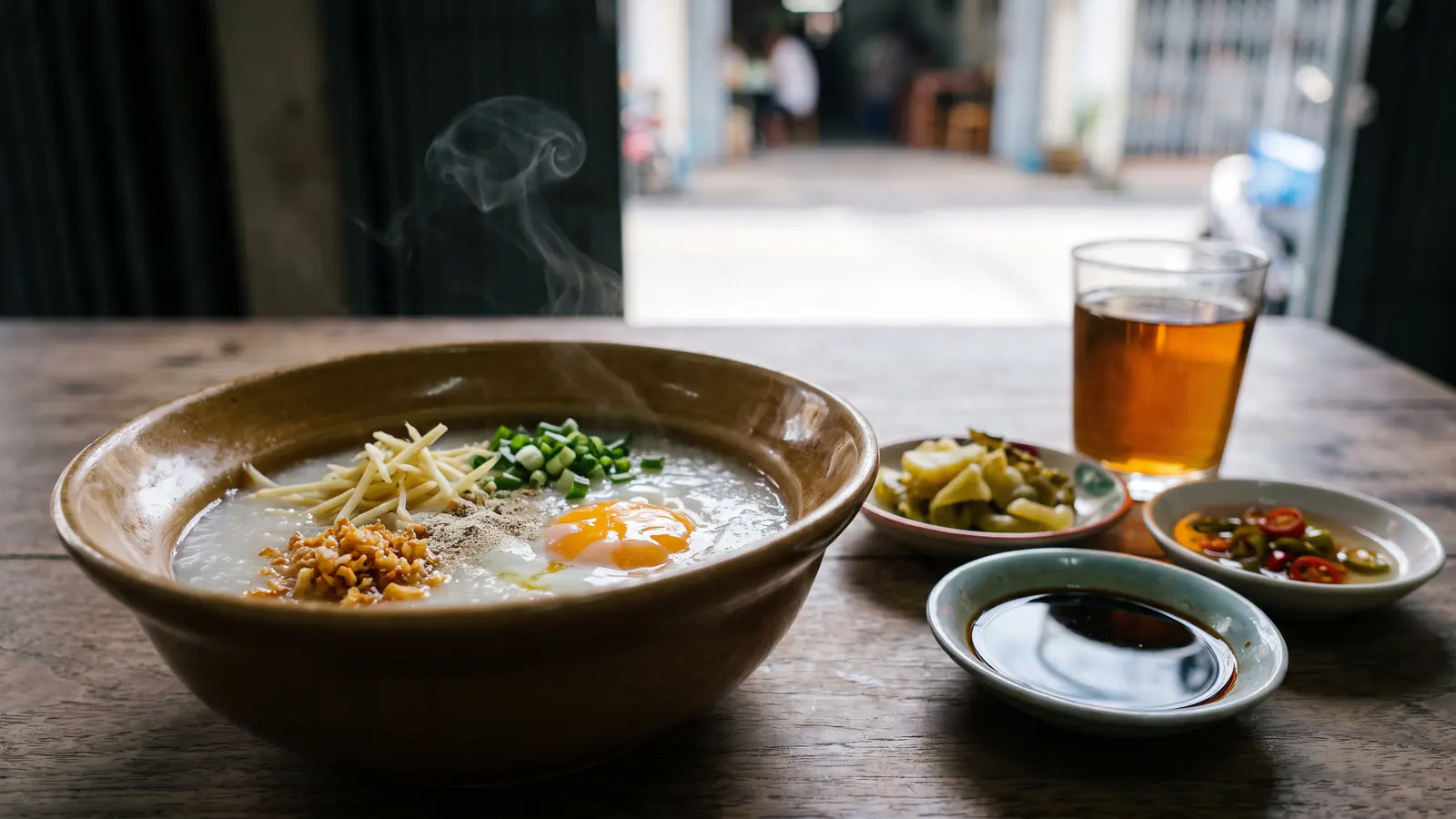
Thai breakfast is mostly savoury and mostly rice, and very little of it belongs only to the morning. That is the part the hotel buffet does not mention. The person at the next table at seven o'clock, working through a bowl with a spoon, is often eating something that is also sold at lunch and again in the evening.
Khun Yak opens at 11:00, so breakfast is not something we serve. What follows is a plain account of what you are looking at when you see it, and how to join in elsewhere. For the words to ask for things, see our guide to ordering food in Thai.
There is no such thing as breakfast food
Wikipedia's account of Thai cuisine says that breakfast dishes are limited, and that very often a Thai breakfast consists of the same dishes with rice that are eaten at lunch or dinner. Fried rice, noodle soups, and steamed rice with something simple on top, such as an omelette, fried or grilled pork or chicken, or a vegetable stir-fry, are commonly sold for breakfast from street stalls as a quick takeaway.
The same page lists a handful of dishes as the specific breakfast ones: rice porridge, omelette on rice, rice soup, fried dough sticks and soy milk. Then it adds that all of them can be found at any other time of day. So a Thai morning is less a separate cuisine than the ordinary one, sold early.
The food writer behind Hungry in Thailand goes further. She does not know anyone who eats the same thing every morning and finds it impossible to say what is or is not a suitable breakfast. Eating Thai Food counts khao man gai, chicken served with rice cooked in its own stock, as a good breakfast dish too. None of this is a rule. It is a habit of eating what is good and available, at whatever hour.
The two rice soups, and how to tell them apart
Two bowls of rice in liquid turn up most often, and from a distance they look alike. Jok (โจ๊ก) and khao tom (ข้าวต้ม) are both rice cooked with water or stock. The difference is what has happened to the grain.
In jok, the rice is cooked until the grains break down and the whole bowl becomes one thick, smooth porridge. Thai-language sources describe the grains as soft and disintegrated, the broth as slightly thickened, and the toppings as few. In khao tom, the grains stay whole and sit in a more plentiful broth, with rice and soup clearly separate, and the bowl comes with plenty of side dishes. If you cannot pick out the individual grains, it is jok. If you can count them, it is khao tom.
Jok, according to Wikipedia's entry on congee, is often served at breakfast with a raw or partly cooked egg added. Minced pork or beef and chopped spring onion usually go in, and the toppings can include fried garlic, slivered ginger, spicy pickles such as pickled radish and sometimes a small piece of fried dough. The same entry says jok is more popular at breakfast, but that many shops specialising in it sell it all day.
Khao tom is usually made with pork, chicken, fish or prawn, and it is the one served with side dishes. A plain version, khao tom kui (ข้าวต้มกุ๊ย), is served at specialist restaurants that bring a long list to go with it, among them a salad of sliced dried Chinese sausage and pork stewed in soy sauce and five-spice. For how the sharing and the spoon work, see how a Thai meal works.
Fried dough and sweet coffee
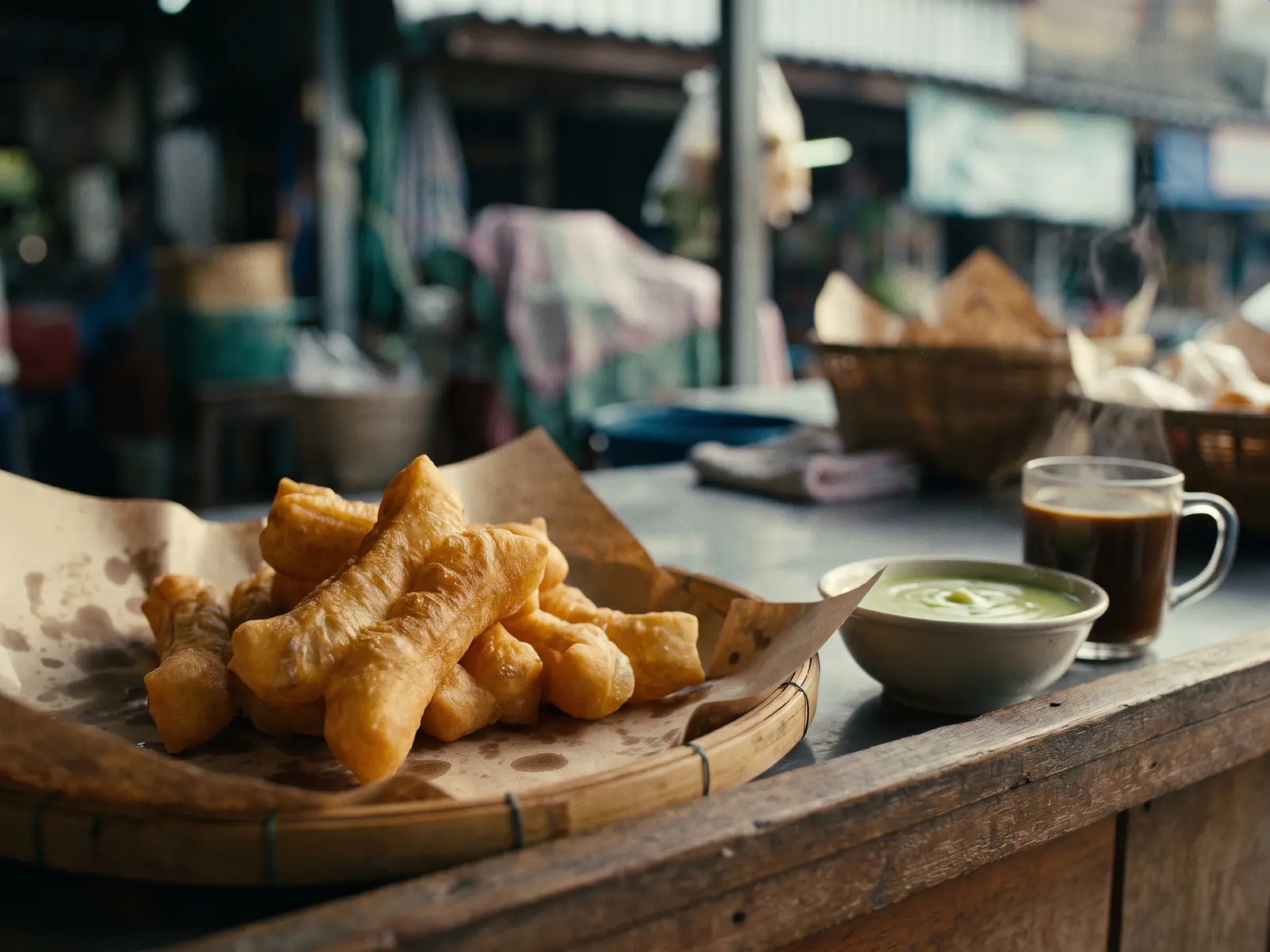
Patongko (ปาท่องโก๋) is a pair of golden fried dough sticks, joined along the middle. It is the Thai version of the Chinese youtiao, and Wikipedia notes it is eaten at breakfast with soy milk or with rice porridge, and often dipped in condensed milk.
The name has an oddity worth knowing. The same source says pathongko was adapted from a Teochew or Cantonese name that belonged to a different pastry altogether, a white sugar sponge cake. Hawkers once sold the two side by side, calling out both names, and customers took the more popular dough sticks to be the one called patongko. The real sponge cake mostly vanished from the market, and the name stayed with the fried dough.
The usual dip is sangkhaya (สังขยา), the Thai relative of kaya. It is a sweet spread of coconut milk, eggs and sugar, sometimes flavoured with pandan, and its colour depends on the egg yolks, the amount of pandan and how far the sugar has caramelised, so it can be pale green or closer to gold. People spread it on bread or dip into it, and patongko is commonly sold with it, or with chocolate and sweetened condensed milk.
Coffee is the other half of the habit. Thai travel writing pairs patongko with old-style coffee, kafae boran (กาแฟโบราณ), which means ancient coffee; that pairing rests on one such page rather than on anything more solid. Perfect Daily Grind describes dark-roasted robusta steeped through a cloth sock filter, then sweetened with condensed or evaporated milk. Thai tea is built the same way, sweetened with sugar and condensed milk, with evaporated milk poured over. The milk in both drinks is covered in our vegetarian and vegan guide.
Rice plates, and what turns up on them
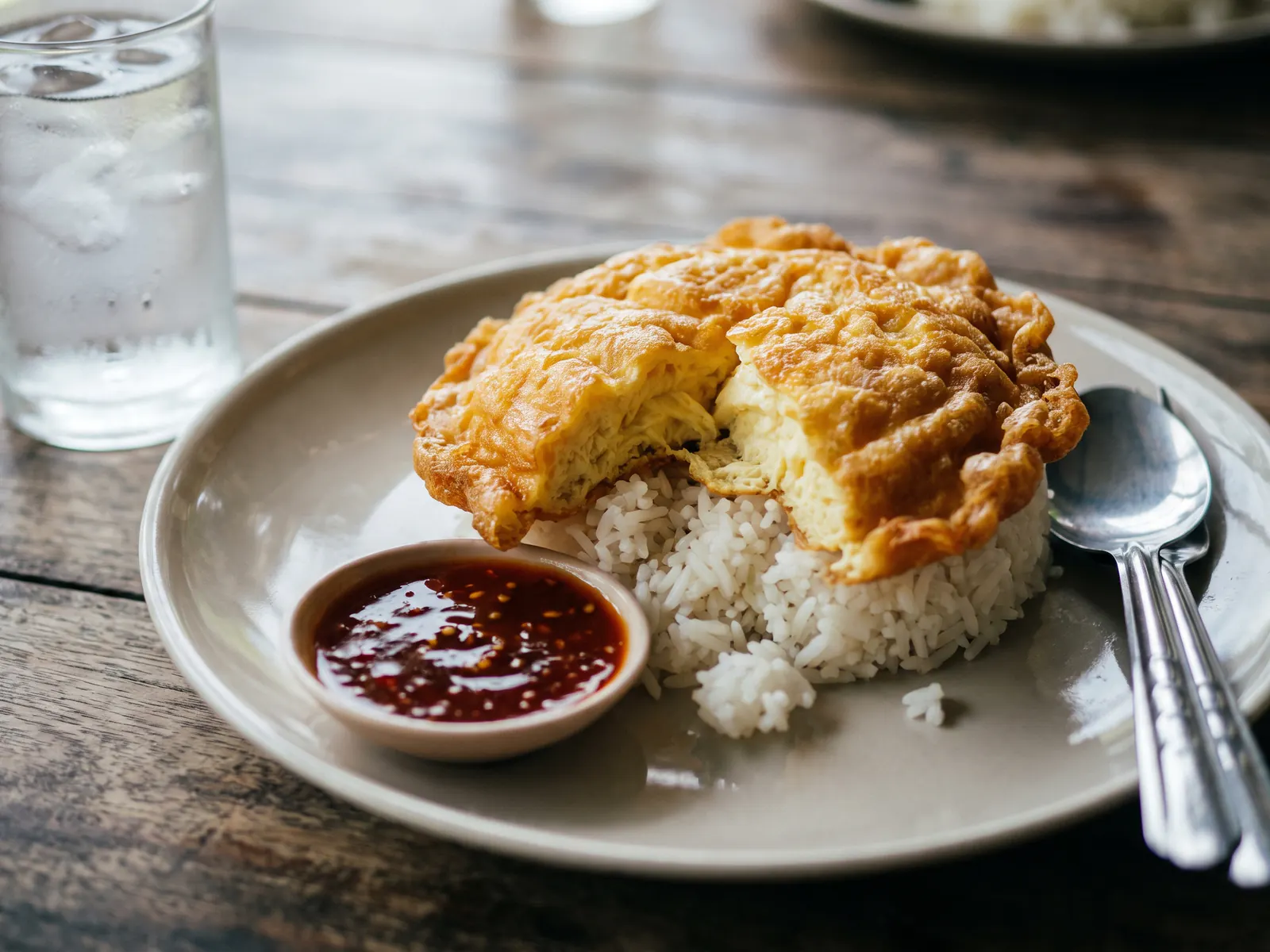
The most common morning plate is khao khai chiao (ข้าวไข่เจียว): an omelette over white rice. It is not the folded omelette of a hotel buffet. The beaten egg, seasoned with a little fish sauce, is deep fried in a wok full of oil and served over steamed rice, according to Wikipedia's entry on omelettes. A Michelin Guide recipe describes the result as soft, fluffy layers with crisp edges, which is why it arrives puffed and ragged rather than neat.
It is often eaten with chilli sauce and a few slices of cucumber, and with a fork and spoon, the spoon doing the work.
The omelette is one of several answers to the same question, which is what to put on rice. Fried or grilled pork, chicken, or a quick stir-fry on top of rice is the same idea, and these single plates are standard stall fare. Noodle soup belongs here as well, and is sold at any hour. The names on these plates follow a pattern, and our guide to reading a Thai menu explains it.
Where the morning crowd goes
By the sources above, there are three kinds of place. The first is the street stall selling single dishes as a quick takeaway: fried rice, noodle soup, rice with an omelette or grilled meat. The second is the specialist shop that makes one thing, jok or khao tom, and sells a long list of sides with it. The third is the early market, where the writer quoted earlier suggests heading out first thing to find fresh local options.
You do not need an early start for all of it. Jok shops often sell it through the day, and the sources agree that the dishes on this page can be found at other times too.
Ordering it, briefly
Four names cover most of this page: jok, khao tom, patongko and khao khai chiao. A dish name said plainly is a fair place to start. The phrases for the rest, such as asking for less chilli or another portion, are in our guide to ordering food in Thai, and the reasoning behind the names is in the menu guide linked above.